

What is Google Discover?
Google Discover is a personalized content feed built into the Google app. It shows users articles, videos, and other content they may be interested in. The main feature is that Discover is not triggered by search queries, but it still analyzes content topics and relevance signals. Google studies what users read, watch, search for, and where they go, then uses that data to build a feed of things it thinks users will want to see.
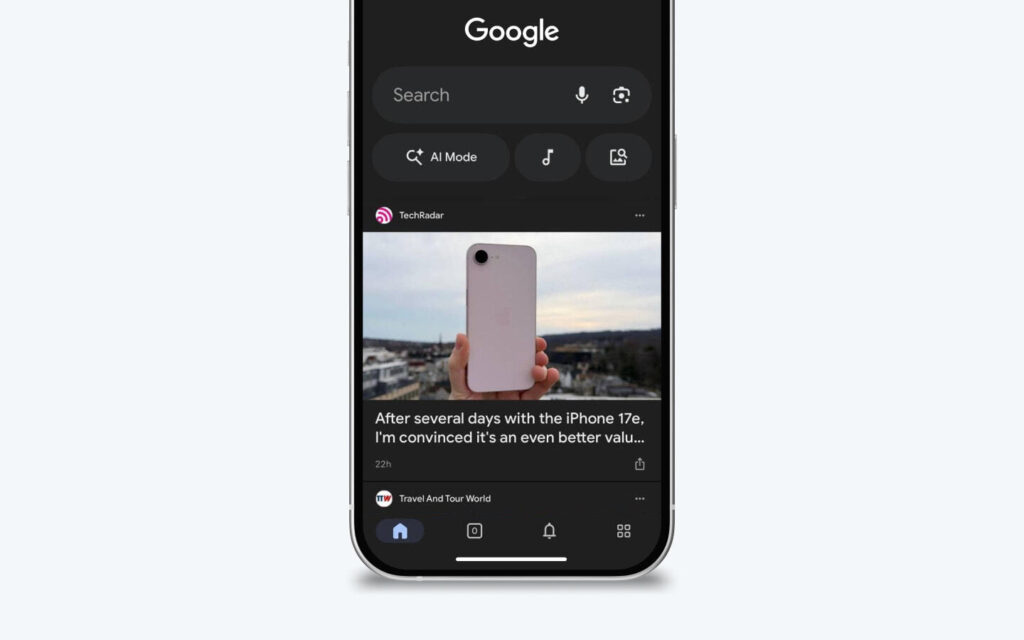
For now, Google Discover feed appears only in the Google app, the mobile Google homepage, and Chrome’s mobile new tab page. However, Google has been testing and planning a desktop rollout.
How does Google Discover work?
To better understand what is Discover on Google, let’s dive deeper into its functionality. Google Discover traffic is driven by interest signals, user behavior, and engagement. The algorithm uses machine learning to analyze each user’s browsing history, app activity, location patterns, search history, and interaction signals, like what they follow, to build a real-time content feed tailored to that specific person.
As follows from the Google Discover definition, it relies less on keywords but still evaluates article quality and publisher credibility. Google may test new content shortly after publication, and if the article fits its requirements, you can start getting a large amount of traffic almost immediately. Classic SEO often takes longer to generate traffic compared to Google Discover feed.
What is RichAds?
Ad network for telegram ads,
high quality push and popunder ads,
domain redirect, native and display traffic source,
buy push ads at $0.005 (CPC), pop ads at $0.5 (CPM),
domain ads costs start from $1.5 (CPM), native ads — from $0.001 (CPC),
ad network offers large volumes of traffic in more than 200 geos from Tier 3 to Tier 1.
Google Discover meaning for publishers
Since its launch in 2025, Google’s AI Overview has been pulling clicks away from traditional search results. Users who previously clicked through to websites now get answers directly on the search page. That’s why many publishers have seen a significant drop in organic search traffic in 2026. Google Discover can help resolve this issue because it sends traffic directly to the site.
Publishers that get featured in the Google Discover feed report that this traffic consistently outperforms their organic search results in volume and CPM. The best thing is that it’s not only for news sites anymore. The platform is adding support for YouTube Shorts, social posts, e-commerce sites, blogs, and affiliate landing pages. There is a great opportunity for brands to reach a new, interested, and ready-to-engage audience.
How to appear in Google Discover feed
Google has never published a detailed guide to the Discover algorithm, but it provides public documentation on best practices, which is helpful. Plus, publishers and SEO experts learnt some patterns that may affect ranking. We’ve gathered all the info into one table to help you understand what is Google Discover and how it chooses content:
| Parameter | What Google checks | Requirements |
|---|---|---|
| User engagement | Google first shows content to a small group of users and monitors their behavior: clicks, reading activity, scrolling, and time spent on the page. If engagement signals are strong, distribution expands. | High click-through rate and long user interaction. Pages must load quickly and deliver content that matches the headline promise. |
| CTR | The algorithm measures how often users click an article after seeing it in the Discover feed. | Clear, engaging headlines paired with visually appealing images that drive high click-through rate. |
| Time on page | Google evaluates what happens after the click. If users stay, scroll, and interact with the page, it signals content quality. | Pages must load quickly and provide valuable, relevant content that engages users. |
| Freshness | Discover prioritizes recently published content. Fresh content has higher chances of appearing. | Frequent publishing and quick coverage of trending topics. |
| Content quality & trust | Google’s Trust and Safety team reviews Discover content and penalizes misleading headlines, fake news, or content created solely for traffic without value. | Content should follow E-E-A-T principles (Experience, Expertise, Authoritativeness, Trustworthiness). Include credible sources and valuable data. |
| Use of AI tools | AI assistance is acceptable, but Google discourages publishing raw, unedited AI content. | Content must be verified and improved by a human before publication. Fact-checking is essential. |
| Visual appeal | Discover is a highly visual feed where the featured image strongly affects click behavior. | Images should be at least 1200px wide and use the max-image-preview meta tag for large previews. Images must accurately represent the article. |
| Image quality | Google flags misleading or spam images. | Use real, original photos or custom-made visuals relevant to the topic. |
To get Google Discover traffic, the content must also comply with Google’s general content policies. It bans:
- Misleading headlines
- Excessive ads
- Copied content
- Shocking or manipulative content
- Poor AI content
Ultimately, to get traffic from Google Discover, publishers must focus on high-quality content. We’ll explore what does it mean exactly in the next section.
What is RichAds?
Ad network for telegram ads,
high quality push and popunder ads,
domain redirect, native and display traffic source,
buy push ads at $0.005 (CPC), pop ads at $0.5 (CPM),
domain ads costs start from $1.5 (CPM), native ads — from $0.001 (CPC),
ad network offers large volumes of traffic in more than 200 geos from Tier 3 to Tier 1.
How to optimize a site for Google Discover traffic
You already know the Google Discover meaning, how it works, and what parameters it assesses to showcase the content. Let’s move from theory to practice and explore how to optimize for Google Discover to increase your chances of getting in.
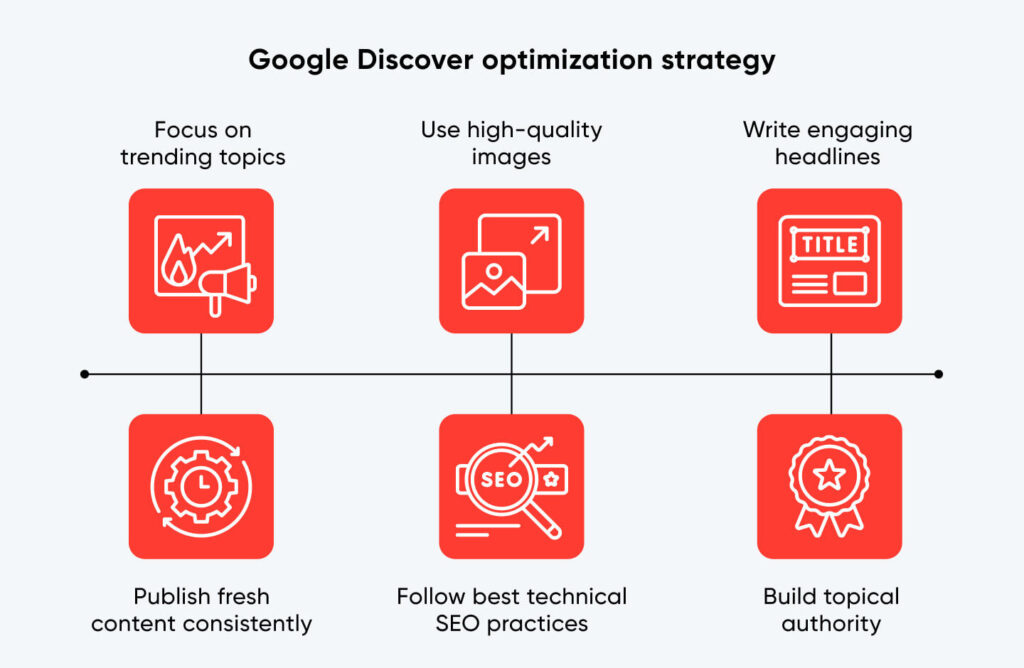
1. Focus on trending topics
If you go back to the Google Discover definition, you’ll see that it’s a “personalized feed”. It means that the algorythm shows different content for different people, which makes it hard to determine exactly what to write about.
However, generally Discover favors popular content on topics that most people care about right now. The best way to find those topics is to monitor Google Discover feeds on multiple devices, check what competitors in your niche are publishing, use SEO tools to identify rising search interest, and track Google Search suggestions and Trends.
While Google Discover traffic works differently from search, most themes are getting popular on both platforms at the same time. So keyword volumes still can help you roughly understand what to post about.
2. Use high-quality images
Images are the first thing users see in the Discover feed, and their quality matters greatly. The main rule is always to use original photos and custom graphics. Also, ensure images clearly relate to the article topic.
The required Google Discover image size is at least 1200 pixels wide with a 16:9 aspect ratio. The platform also requires high-resolution photos of more than 300,000 pixels. Plus, you should enable the large image preview using the “max-image-preview: large” meta tag in your page’s head section.
3. Write engaging headlines
Headline and image determine whether a user clicks your article. Some SEO experts even consider headlines to be the most important factor in Google Discover traffic.
The best Discover headlines drive emotional interest, telling users something surprising or valuable is inside. But it should actually be true, as articles with clickbait and misleading headlines are penalized. You can A/B test headlines and monitor CTR changes in Google Search Console’s report on Google Discover traffic to find the most effective strategies.
4. Publish fresh content consistently
Google is more likely to promote content from sources it recognizes as active and reliable. Starting as a news feed, Discover shows mostly fresh content that is relevant for one to three days. However, old evergreen articles may also appear in Google Discover if a topic becomes popular again.
To increase your chances of getting into the Google Discover feed, maintain a consistent publishing schedule. Once you start driving traffic from Discover, the algorithm learns to crawl your site with the frequency you publish, so your content appears consistently.
5. Follow Google Core Web Vitals requirements
Google measures user experience based on page loading speed, responsiveness, and visual stability. Those are technical parameters, and you can improve them by minimizing JavaScript, compressing images, using more responsive formats like AVIF, and optimizing for mobile. Use clean formatting and easy navigation to improve the browsing experience.
6. Build topical authority
Google Discover likes publishers that demonstrate expertise in a subject. When you write related content and link to supporting pieces, it shows Google that your site is a credible source on the topic.
You should also add author bios with credentials, cite reputable sources, provide exclusive data, and include real examples and case studies.
Conclusion
Here, we discussed what is Google Discover, how it works, and how your site can get featured in the feed. As AI Overview continues to decrease the value of organic search rankings, Google Discover becomes the most promising alternative for website owners. However, Google Discover traffic is unstable and hard to get. One article may go viral and another drive nothing.
To consistently win on Discover, you should produce quality content that people are interested in, technically optimize pages for Google requirements, and publish regularly. You can also try a paid traffic trigger strategy. After publishing a new article, drive traffic through pop ads to boost engagement. Real users’ clicks and prolonged visits show Google that your content is good and interesting, so it may be featured in Discover.
Note that traffic quality is very important, so you need a premium traffic source like the RichAds ad network for launching paid ads. We work with exclusive publishers and provide advanced optimization tools to help you drive only quality traffic. Partner with RichAds to boost engagement and increase site visibility in 2026!
Related articles:
- How to Get Traffic From Google Discover in 2026
- Best Sources to Buy Cheap Website Traffic in 2026
- What is pop traffic and where to buy it?
- 12 Best Affiliate Marketing Networks in 2026
- Search arbitrage monetization: how it works






 Latest articles