


Quick answers:
- B2B traffic is about quality, not volume. Buying cycles are long, several people are involved, and buyers need multiple touches and proof (case studies, brand trust) before converting.
- Six main sources work in 2026: SEO, PPC, email marketing, social media, content marketing, and affiliate ads (popunders, pre-roll video, native).
- Best strategy is to mix channels. Most brands already run SEO and PPC, so add what they skip: global reach and repeat exposure through traffic arbitrage. Start with an ad network that offers personalized support and campaign management, such as RichAds.
B2B website traffic vs B2C: what is different?
Both B2B and B2C brands want visitors. But the buyers, the buying process, and the goal of a visit are different. Here is a quick comparison:
| B2B | B2C | |
| Who buys | A company, often with several people involved | One person or a household |
| Sales cycle | Long | Short |
| Goal of a visit | Lead, demo request, call, download | Purchase |
| Best content | Guides, case studies, comparisons, calculators | Offers, reviews, visuals |
| Traffic volume | Small audience | Large audience |
| Success metric | Leads, pipeline, closed deals | Orders and revenue |
These differences affect the choice of traffic sources. So when we talk about driving B2B website traffic, we should keep in mind three things:
- Quality beats volume. More visits do not always mean more sales. A site can get thousands of visitors but only a few useful contacts. You need a channel that brings the right audience for your offer. And for B2B specifically, you should ensure that someone follows up on every lead.
- Buyers need several touches. A decision maker rarely converts on the first visit. They might see an ad, read an article a week later, open an email, and only then book a call. Your B2B traffic sources should work together to guide leads down the funnel.
- Trust is crucial. Companies spend real money on B2B purchases, so they want proof. Case studies, clear pricing logic, and a well-known brand all help. That’s why you should spend some of your budget on building brand awareness first.
What is RichAds?
Ad network for telegram ads,
high quality push and popunder ads,
domain redirect, native and display traffic source,
buy push ads at $0.005 (CPC), pop ads at $0.5 (CPM),
domain ads costs start from $1.5 (CPM), native ads — from $0.001 (CPC),
ad network offers large volumes of traffic in more than 200 geos from Tier 3 to Tier 1.
Best traffic sources for B2B websites
There are six main traffic sources for B2B websites that work in 2026. You can choose the one that suits your goals, but the best strategy is usually to mix several, or even all of them.
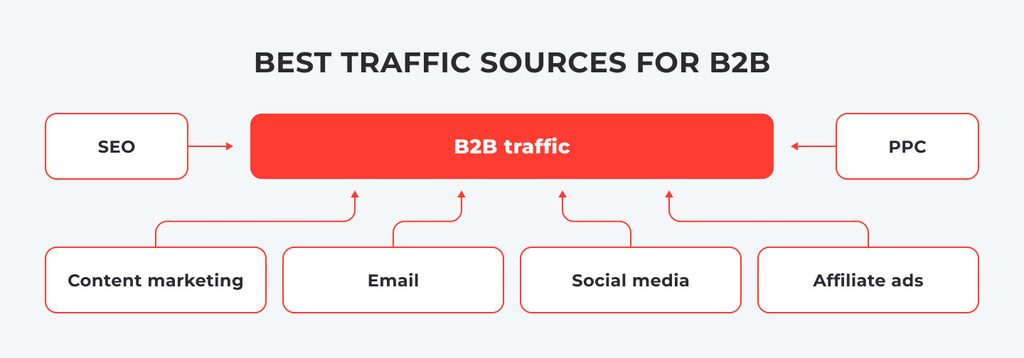
Here is a clear table to check all B2B traffic sources at a glance:
| Channel | Speed | Cost (per month) | Best for |
|---|---|---|---|
| SEO (organic) | Slow | ~$5,000 (5-6 months until first results) | Steady, long-term leads |
| PPC (paid search) | Fast | ~$8,000 | Capturing active demand |
| Email marketing | Medium | ~$1,500 | Nurturing and repeat visits |
| Social media | Medium | ~$6,000 | Reaching specific audiences |
| Content marketing | Slow to medium | ~$5,000 | Catching leads early on the researching phase |
| Affiliate ads | Fast | ~$3,000 | Reach, awareness, conversion, retargeting |
In analytics, these sources are usually labeled as organic, paid, email, social, referral, and direct traffic. Let’s review each channel in detail.
SEO
SEO (Search Engine Optimization) is one of the best traffic sources for B2B in the long run. When your site ranks for searches related to your service, you reach people who already have a need. It’s warm traffic and you don’t pay per click or per visit.
Pros
- Visitors have a clear intent
- Traffic keeps coming without paying for each click
- Builds trust and brand authority over time
Cons
- Results take months
- Needs a clear strategy and well-made content
Tips for B2B
It’s a simplified plan to give you a basic understanding of how to use SEO to drive traffic:
- Do keyword research. Start with buying-intent keywords like “[your product] pricing,” “[tool] alternatives,” “buy [your product],” and “[service] for [industry]”. They help you attract buyers who are close to a decision.
- Write content. Create useful landing pages for each keyword.
- Add glossary and how-to pages. They catch people at the start of their research and lead them deeper into your site.
- Fix the basics. Ensure that your site loads fast, mobile-friendly, and has a clean structure. It helps rankings and conversion.
- Earn links. Mentions on industry sites bring authority and also send referral visits.
Remember that SEO is a slow engine, so do not judge it after a month. You can pair it with a faster channel like PPC or affiliate ads to increase its effectiveness.


PPC
PPC (paid advertising) lets you reach buyers right when they are searching for your product. Google Ads, Amazon Ads, Microsoft Ads — they all work on a pay-per-click (PPC) model.
It’s one of the quickest ways to reach leads with high commercial intent, especially for searches about services, quotes, or suppliers.
Pros
- Launch in days and see results fast
- Strong intent from search queries
- Easy to test messages and pages
Cons
- It can get expensive
- Traffic stops when you stop paying
Tips for B2B
PPC advertising is an effective B2B traffic channel, but only if you set up campaigns right. There are many details and factors to keep in mind, so it’s best to hire a professional.
We’ll cover just the basic steps:
- Create a specific landing page for each campaign. Do not dump all clicks on your homepage. The closer the ad matches the page, the better the conversion.
- Use negative keywords. They block searches that waste the budget.
- Track conversions from day one. Set up a tracker or analytics system to count clicks, form fills, demo requests, and calls.
- Retarget visitors. Many B2B buyers need a reminder before they act. You can create a dedicated retargeting campaign for this audience.
PPC is great for capturing existing demand. But if your brand is new or you offer rare or exclusive products, it won’t work. You’ll need to leverage awareness channels first to create that demand — we’ll talk about those later.
What is RichAds?
Ad network for telegram ads,
high quality push and popunder ads,
domain redirect, native and display traffic source,
buy push ads at $0.005 (CPC), pop ads at $0.5 (CPM),
domain ads costs start from $1.5 (CPM), native ads — from $0.001 (CPC),
ad network offers large volumes of traffic in more than 200 geos from Tier 3 to Tier 1.
Email marketing
Email doesn’t bring new visitors to your site. It works with known contacts and helps re-engage them. Once someone subscribes, they have already shown interest, so every email is an opportunity to direct them to a new page or a new offer.
Pros
- Low cost per visit
- Warm audience that already knows you
- Works well with every other channel
Cons
- You need a list of contacts first
- Generic emails get little response; you need a thoughtful strategy
Tips for B2B
Email isn’t the first choice for driving B2B website traffic. It works best when other channels fill the list. It also requires a professional approach, powerful analytics, and regular management to deliver results.
Main rules to follow:
- Segment your list. Group contacts by industry, company size, or the page they visited. A message that fits their situation beats a mass blast.
- Build a short nurture series. Send a welcome email, then a useful guide, then a case study, then a call to action.
- Link to one page per email. Keep the path to conversion simple.
- Respect privacy rules. Only email people who agreed to hear from you, and follow local laws such as GDPR.
Social media
Social media is a strong channel for B2B traffic because you can target the exact people you want. LinkedIn is the standout choice, since it lets you target by job title, industry, company, company size, and location.
You can use it for paid promotions, organic posting, and direct outreach.
Pros
- Precise targeting by role and company
- Good for reaching decision makers
- Builds brand authority
Cons
- Clicks can cost more than on other channels
- Overly promotional posts usually get ignored
Tips for B2B
Social media marketing is a must-have channel for both B2B and B2C brands in 2026. People largely look for solutions on Instagram, Facebook, and LinkedIn.
To drive traffic from social media, consider these steps:
- Choose platforms where your buyers hang out. Depending on your market, that could be industry communities, YouTube, LinkedIn, Facebook, or Telegram groups.
- Lead with value. Social ads work best when useful content and personal contact come together. Share tips, insights, statistics, and case stories.
- Promote assets, not just your homepage. Ads that offer a guide or webinar usually get a better response than ads that say “buy now.”
What is RichAds?
Ad network for telegram ads,
high quality push and popunder ads,
domain redirect, native and display traffic source,
buy push ads at $0.005 (CPC), pop ads at $0.5 (CPM),
domain ads costs start from $1.5 (CPM), native ads — from $0.001 (CPC),
ad network offers large volumes of traffic in more than 200 geos from Tier 3 to Tier 1.
Content marketing
Content marketing feeds almost every other B2B traffic channel. Good content ranks in search, gives your ads something worth clicking, fills your email list, and gives your sales team something to share.
The most useful format for driving B2B website traffic is the lead magnet: a helpful resource that visitors get in exchange for their contact details. Strong lead magnets include:
- Guides and checklists
- Templates and calculators
- Industry reports and studies
- Webinars
B2B buyers usually aren’t ready to buy right away — they are researching. Lead magnets help answer their questions while promoting your brand. For example, a guide titled “How to Plan an Advertising Campaign” can attract companies that will later need a service or tool.
Pros
- Captures leads who are not ready to buy yet
- Supports every other channel: SEO, email, social, and ads
- Builds trust and brand authority over time
- Content keeps working long after you publish it
Cons
- Slow to show results
- Takes time, skill, and steady effort to produce good content
- Hard to link directly to closed deals
Tips for B2B
Content marketing is a must-have channel. It supports trust, helps build brand awareness, captures leads early, and creates authority.
You can start with lead magnets. Here’s a short checklist of how to do it right:
- Solve one problem per lead magnet.
- Keep the form short. Ask for the minimum: name, work email, and company.
- Follow up fast. Send the resource right away, then add the contact to an email nurture series.
- Back every claim with a source. Bold promises without proof can hurt trust.
- Get mentioned elsewhere. Look for guest posts, partner pages, and media mentions to bring referral traffic and increase credibility. They may not send huge volumes, but people will trust you more.

Affiliate ads
Affiliate marketing is often missing from B2B plans, and that’s a huge mistake. Buying traffic through performance ad networks is a great way to bring B2B buyers to your site.
Pros
- Easy launch in a day
- Global traffic from Tier 1, 2, and 3 countries
- Prices start low, and you choose your bids.
- A simple way to get repeat exposure
- Effective for non-mainstream and restricted niches like Gambling, Betting, Dating, and Finance
Cons
- The intent is lower than in search
- Some sources are junk, so choose a platform wisely and monitor metrics closely
There are also many ad formats to choose from, and not all of them work for B2B. We recommend three options: popunders, in-stream video ads, and native advertising.
Popunder ads
A popunder is a landing page that opens in a new tab behind the page the user is viewing. Each paid impression is a full page view, and you usually pay per 1,000 impressions (CPM model).
You don’t need banners or additional creatives. A URL to your landing page and basic targeting are enough.
The RichAds ad network shared a brand awareness case that used pop traffic in the USA, the UK, and Germany. It delivered 18.4 million impressions, reached 3.2 million users, and generated 412,000 site visits at a CPM of about $1.2. Time on site went up 29%. It shows the scale popunders can reach at a low cost.
Pre-roll video ads
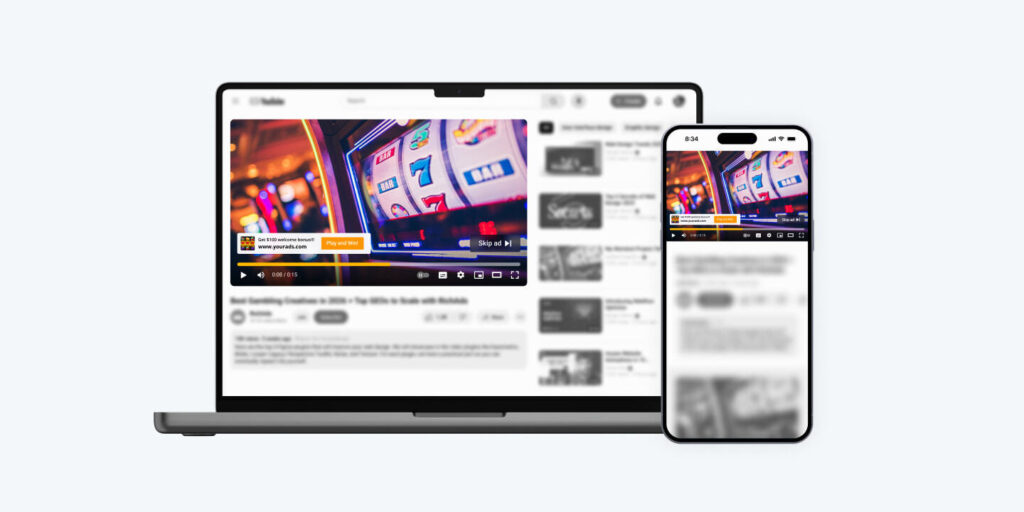
Pre-roll ads are short videos that play before the video a person came to watch. The viewer is already focused on the player, so attention is high.
A 15-second video is a good starting length. Users can usually skip it after 5 seconds, so put your brand and key message up front.
You can also pair pre-roll with popunders. Use pre-roll to build memory and brand awareness, and pop ads to send visitors to your site.
Native ads
Native ads look like part of the page, for example, a recommended article on a news or blog site. They tend to bring warmer visitors than popunders and pre-rolls, because the ad fits the content around it.
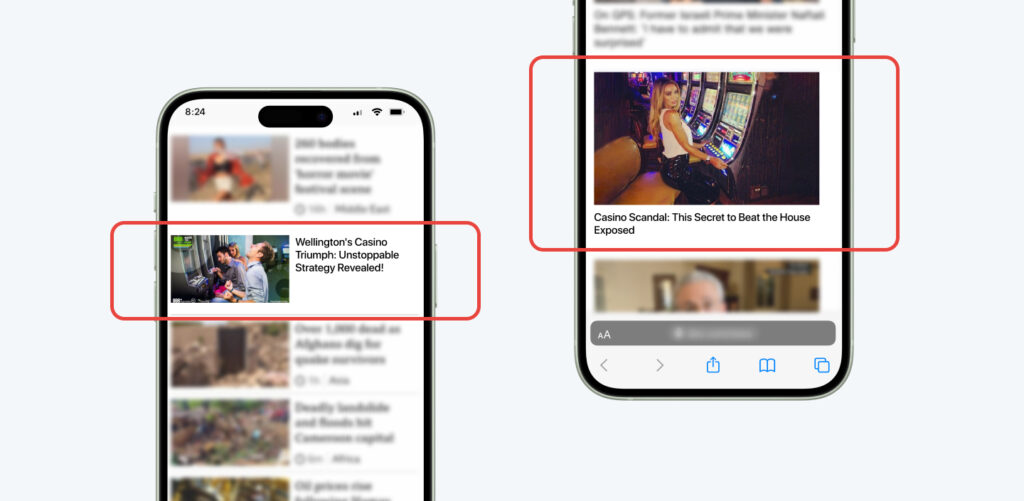
Native ads need quality creatives. To find the best variants, test several headlines, texts, and images. Create a dedicated landing for these clicks. You can combine native ads with content marketing and offer users a lead magnet to download after clicking your ad.
Conclusion
The best traffic sources for B2B include SEO, PPC, social media, content marketing, email, and affiliate ads like popunders, pre-rolls, and native ads. You don’t have to choose one; the best strategy is to use a mix of channels that match your goal.
Most brands already run SEO and PPC. If you want to pull ahead, add what your competitors skip: global reach and repeat exposure through traffic arbitrage.
Choose a reliable ad network like RichAds, build a landing page, design creatives, connect your tracker, and run a test campaign. With a premium publisher base, advanced optimization tools, and expert manager support, RichAds is your trusted partner for B2B website traffic.
What is RichAds?
Ad network for telegram ads,
high quality push and popunder ads,
domain redirect, native and display traffic source,
buy push ads at $0.005 (CPC), pop ads at $0.5 (CPM),
domain ads costs start from $1.5 (CPM), native ads — from $0.001 (CPC),
ad network offers large volumes of traffic in more than 200 geos from Tier 3 to Tier 1.
FAQ
The main traffic sources for B2B websites are organic search (SEO), paid search (PPC), email marketing, social media (especially LinkedIn), content marketing with lead magnets, and affiliate marketing through ad networks like RichAds.
Most successful brands combine several sources to boost overall efficiency.
“Best” always depends on your goal. Search traffic, both organic and paid, usually converts well because visitors are actively looking for a solution. But if there is no demand, you should start with awareness channels like popunders and pre-roll video ads. They deliver relatively high conversion rates and improve search, email, and retargeting performance over time.
For fast growth, run PPC and affiliate ad formats such as popunders, pre-roll, and native ads. Then add email campaigns and retargeting to bring visitors who didn’t convert. Track every channel so you can put more budget into what works.
Yes, paid traffic gives speed and control that other channels cannot. However, it requires skills and knowledge to build a profitable campaign that won’t waste your budget.
Start with ad networks that offer personalized support and campaign management, such as RichAds. Managers can help you with the right setup and offer optimization tips so you can achieve the best results.
There is no fixed number because it always depends on your goals. For example, if you want 10 new customers a year and you close 1 in 10 qualified leads, you need about 100 qualified leads. If 2% of visitors become qualified leads, you need around 5,000 relevant visitors per year. These numbers will vary from brand to brand.









 Latest articles